ServicesCommercial Roofing
Artesia Commercial Roofing for Shops, Offices and Small Buildings
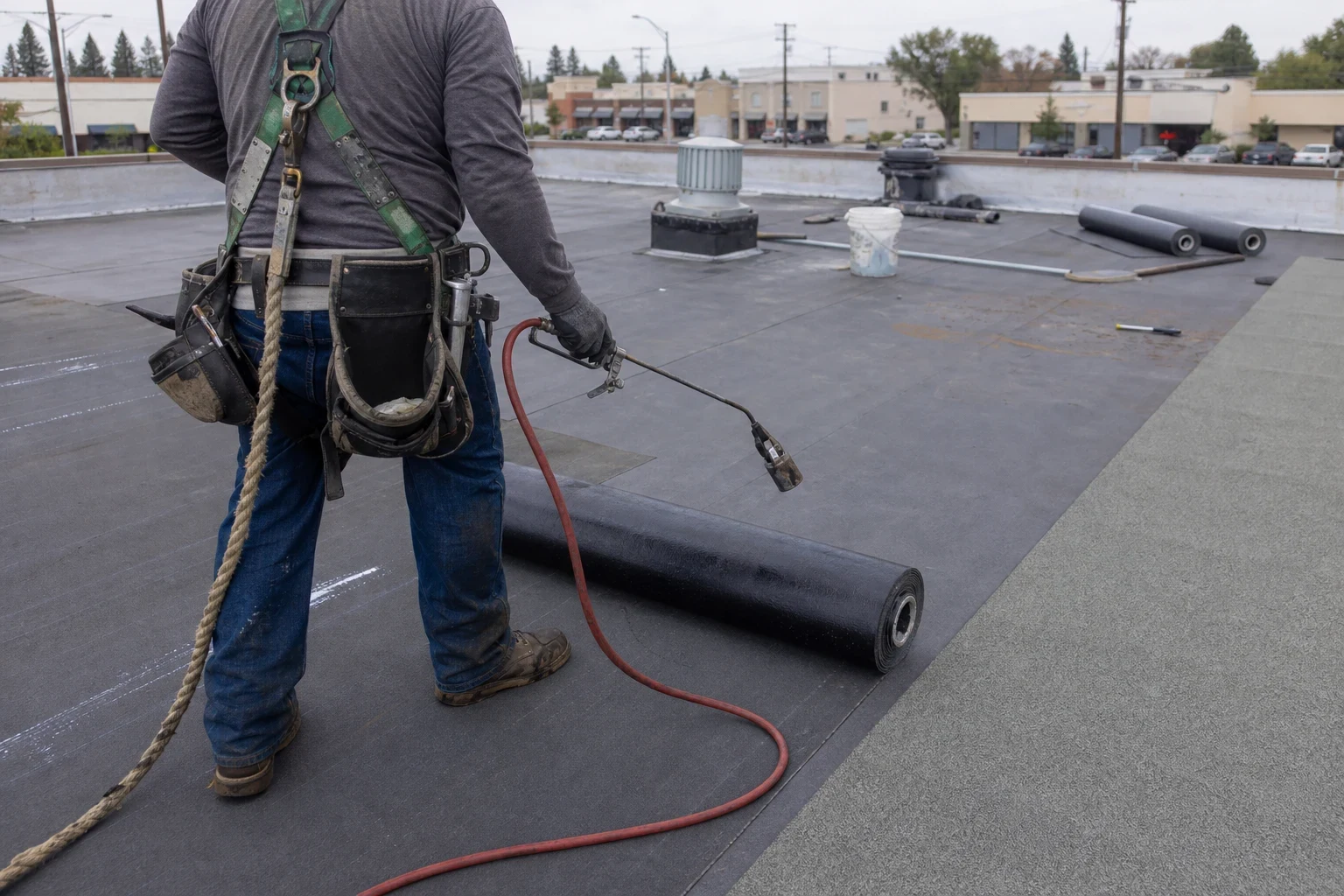
We fix and replace roofs on storefronts, offices, small warehouses and mixed-use buildings. First we walk the roof and photograph the seams, drains and flashing, then we show you what we found so you can schedule the work around your business.
Roofing work planned around your business
Around Artesia, Cerritos and Norwalk, most commercial buildings have low-slope roofs: TPO and other single-ply membranes, modified bitumen, or older built-up tar and gravel. They wear out differently than a pitched house roof. Water lingers instead of draining off, seams slowly open after years in the sun, and trouble usually starts at rooftop units, drains and parapet walls.
Building owners and managers rarely get onto the roof, so they're left trusting whatever a contractor tells them. We do it differently. Each inspection includes labeled photos of our findings, showing where on the roof every shot came from. When a repair is enough, we tell you. When the membrane can't be saved, the photos make the reason clear.
We schedule around your hours and your tenants, and we send picture updates as the work progresses, so you can check the finished details without going up a ladder.
What our commercial roofing covers
Low-slope membrane repair
We patch and reseal TPO, modified bitumen and built-up roofs, matching the repair to the existing system so it bonds and holds. Open seams, punctures and blistered areas are cut back to sound material first.
Full roof replacement
When the old roof is done, we tear off to the deck, replace any soft or rotted sections, and install a new membrane system. You see the bare deck in pictures before it is covered.
Rooftop unit and penetration flashing
HVAC curbs, vent stacks, conduit and skylights are the most common leak points on a commercial roof. We reflash them properly instead of smearing mastic over the problem.
Drains, scuppers and ponding
Standing water shortens a roof's life. We clear and repair drains and scuppers, and where low spots keep holding water, we explain options like tapered insulation or added drainage.
Parapet walls and edge metal
Cracked parapet caps and loose edge metal let water run behind the membrane. We repair or replace the coping and termination details so the edges stay sealed.
Signs your building's roof needs attention
- Water that stays after rain
- If puddles are still on the roof two days after a storm, the drainage isn't keeping up. Ponding breaks down membranes and adds weight the structure wasn't built to carry.
- Stained ceiling tiles
- Brown rings in drop ceilings often show up long before an active drip. The leak may be several feet away from the stain, which is why we trace it from the roof side.
- Seams lifting or bubbling
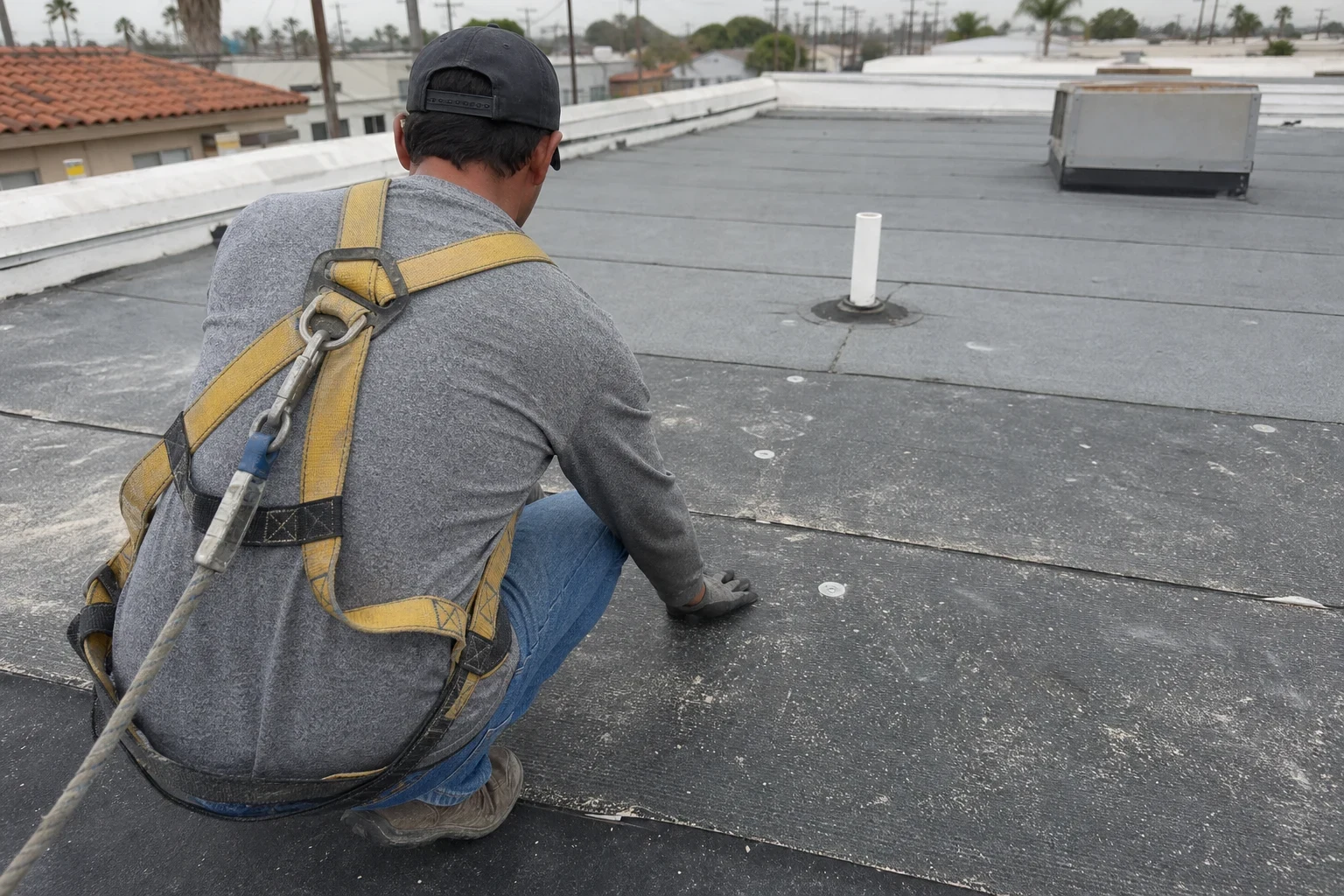
- Membrane seams that peel at the edges or blisters that feel spongy underfoot mean water or air has gotten underneath.
- Cracks around rooftop equipment
- Sealant around HVAC curbs and vents dries out and splits in steady sun. Once it opens, winter rain runs straight into the building.
- Patches on top of patches
- A roof covered in layers of old repairs is often telling you it's time for a real assessment of whether to keep fixing or start fresh.
How a commercial roof job runs
- 1
Walk the whole roof
We inspect the entire roof, not just the spot you called about. Drains, seams, flashing and edges are photographed, and we check inside for staining where we can.
- 2
Go over the findings with you
We send the pictures and talk you through them, then give you a free written estimate with each item listed. You see the repair option and, if it makes sense, the replacement option side by side.
- 3
Schedule around your operation
We agree on start times, access, parking and where materials will be staged, so customers and tenants aren't disrupted more than they need to be. We pull the permit when the work requires one.
- 4
Do the work and document it
Each stage is recorded, including anything hidden once the new roof goes on, like deck repairs. You'll see the finished flashing and seams before we pack up.
- 5
Clean up and walk it with you
We clear debris from the roof, the ground and the drains, and go over the final set of images so you have a record of the roof's condition for your files.
What sets the cost of a commercial roof
Buildings of equal size can end up with very different prices. The type of roof, the condition beneath it and how hard it is to work on all play a part. Your written estimate itemizes each piece so you know where your money goes, and we offer financing through Service Finance Company, subject to credit approval.
- Square footage and roof type
- Size sets the starting point, and the membrane changes both material and labor. Single-ply TPO and built-up roofs carry different prices.
- Deck and insulation condition
- Soaked insulation or damaged decking must be removed before the new roof goes down. We photograph it so you can see what's being replaced.
- Equipment and openings on the roof
- Each HVAC unit, vent and skylight needs separate flashing. A crowded roof takes longer to work than a clear one.
- Getting up there and stripping off
- How tall the building is, how materials reach the roof and how many old layers have to come off all change labor and disposal costs.
Questions from building owners
- Can my business stay open during the roof work?
- Usually, yes. We time the loud work, access and staging around your business hours and keep paths clear. If part of the building has to close for a day, you'll hear from us in advance.
- Is repair or replacement right for my building?
- That comes down to how much of the membrane is still good and whether the insulation has gotten wet. We show you photos of the trouble spots, and when both options are reasonable, you get both in writing. If a repair buys you several solid years, we'll recommend the repair.
- Will you help with a commercial insurance claim?
- Yes, we work directly with your insurance claim. We record the damage with photos and measurements and can join the adjuster on the roof. Coverage is up to the adjuster, but you'll have a clear account of what we found.
- Which commercial roof types do you work on?
- We handle low-slope systems such as TPO, modified bitumen and built-up roofs, plus sloped commercial roofs in shingle or tile. If your building combines several, we inspect every section. See our Flat Roofing page for more on low-slope systems.
See what's happening on your roof
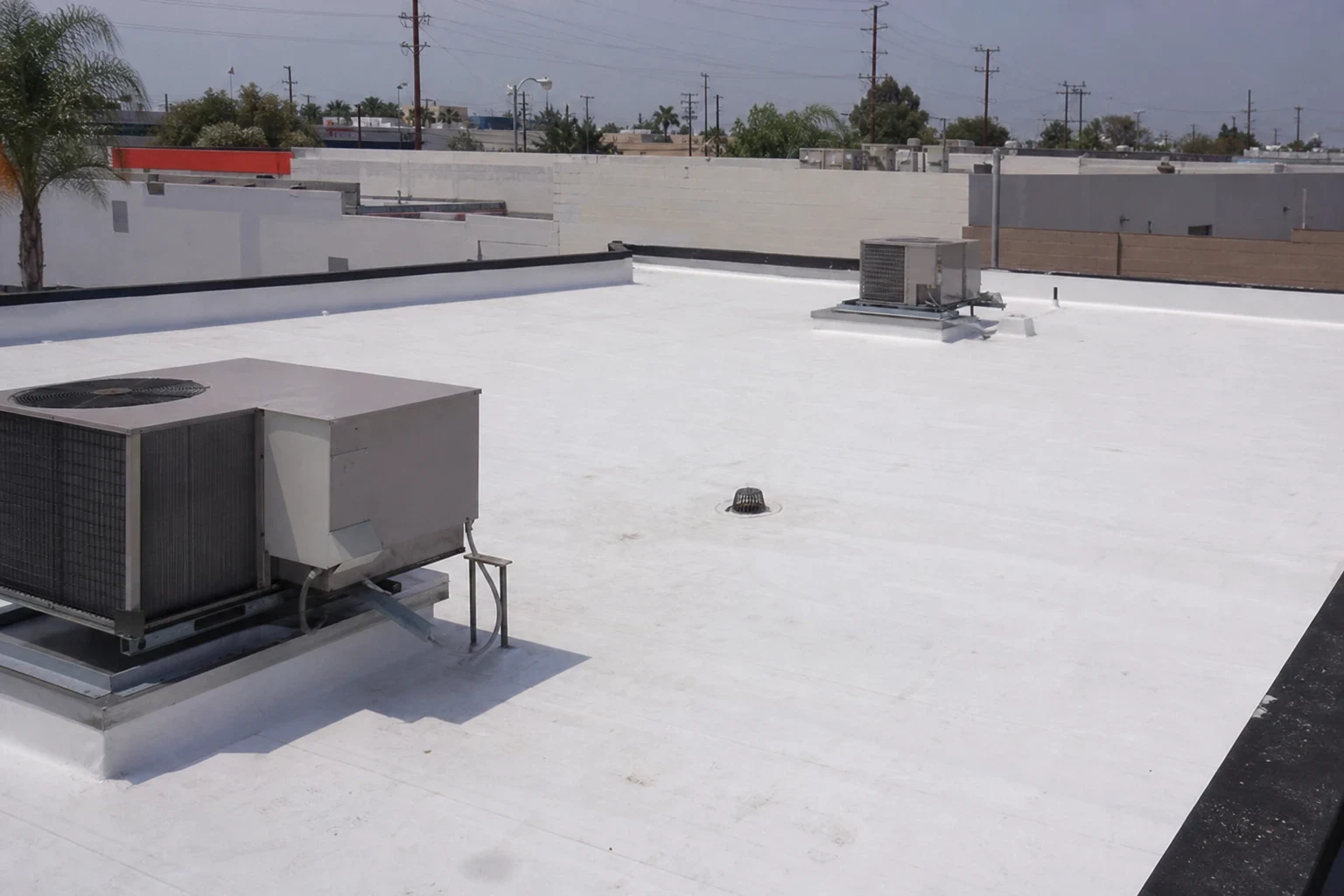
We'll inspect your building's roof, send you the pictures and give you a free written estimate. No climbing required on your end.